

Kashmiri Blue Sapphire
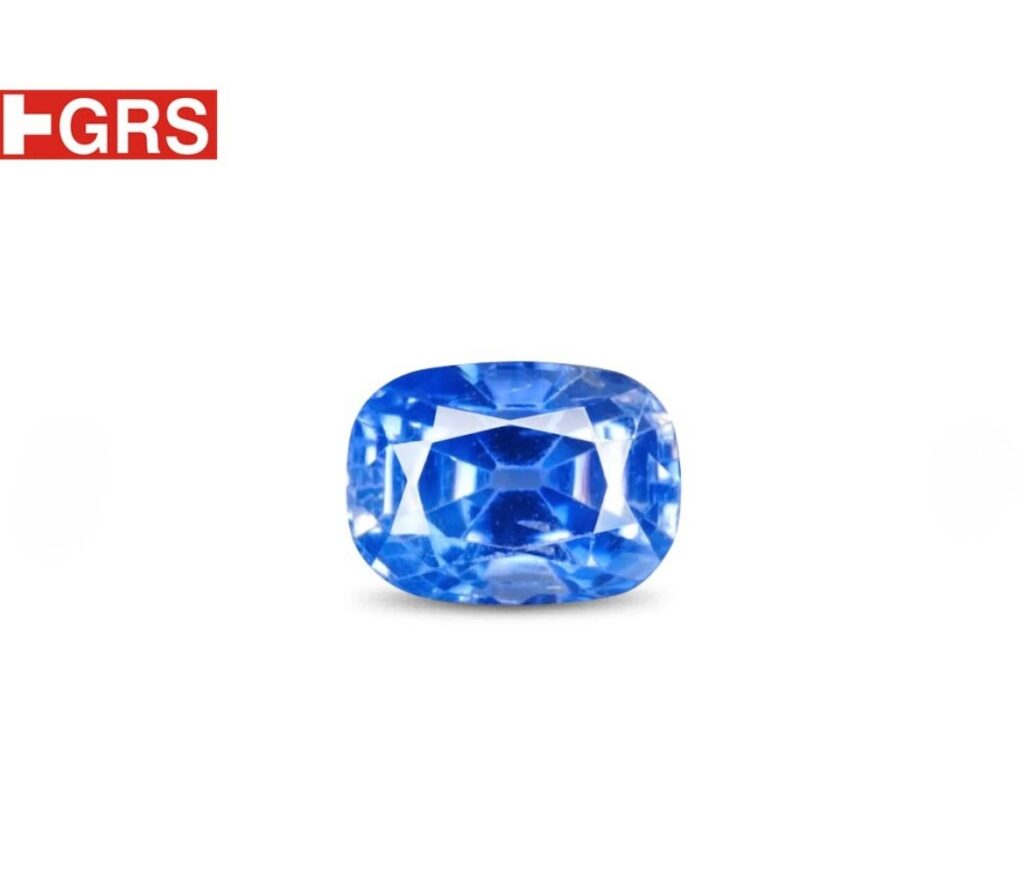
Often regarded as the rarest gemstone in the world, this stone occupies a position beyond conventional comparison. If the Burmese Ruby is known as the “King,” this gemstone has long been referred to as the “King of Kings.”
A Singular Discovery
Discovered high in the Himalayan Zanskar range in 1881, these gemstones are among the most sought-after blue stones in history. Their legendary status is the result of a rare natural phenomenon combined with an exceptionally brief mining period.
The Velvety Appearance
The defining characteristic is its distinctive “sleepy” or velvety luster — a visual quality unmatched by other sapphires.
The science: Within the stone are microscopic, needle-like inclusions known as rutile silk, along with extremely fine liquid layers. These inclusions do not block light; instead, they scatter it evenly throughout the gem.
The effect: This diffusion produces a soft, glowing blue often compared to silk or blue oil. Remarkably, the stone retains its vivid color even in low light or candlelight — a rare characteristic among colored gemstones.
The Cornflower Blue Standard
While many sapphires appear blue, this particular shade — often referred to as cornflower blue — represents a precise balance of saturation and tone.
- Highly saturated, pure violet-blue hue
- Maintains richness in both bright and low light
- Does not darken or wash out like stones from other regions
Almost every exceptional specimen in existence today has passed through history before reaching the present.
A Six-Year Legend
The source of the finest stones, commonly referred to as the “Old Mine”, was effectively exhausted in just six years.
- 1881: A landslide in the Padar region revealed the first crystals
- 1882–1887: Mining continued under royal supervision
- 1887: The primary deposit was officially declared depleted
As a result, nearly all high-quality examples available today are antique stones, often reclaimed from royal collections or historic jewelry.
Extreme Origins
The original mines are located at an altitude of approximately 15,000 feet (4,500 meters), in one of the most inhospitable environments on Earth.
- Mining possible only three months per year
- Modern geological surveys conducted in 2024–2025
- The Old Mine quality remains the global benchmark
Value and Long-Term Significance
These gemstones are widely regarded as one of the ultimate blue-chip assets in the world of fine gems.
- Frequently exceed $200,000 per carat at major auctions
- Stones above 10 carats are extraordinarily rare
- Most professionals encounter them only in museums or elite auction houses