

Alexandrite
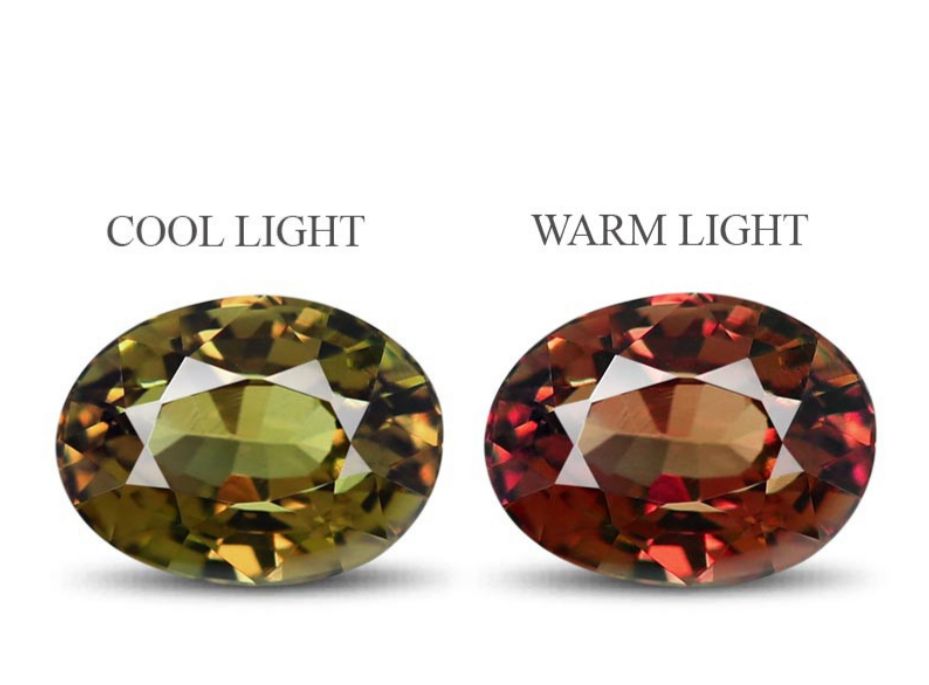
Often called “emerald by day, ruby by night”, this gemstone is among the rarest and most fascinating stones in the world. A variety of the mineral chrysoberyl, it is renowned for its extraordinary ability to change color depending on the light source.
The “Alexandrite Effect”
The most defining characteristic of this stone is its dramatic color change, a phenomenon caused by the presence of chromium within its crystal structure.
Chromium absorbs light selectively, causing the gemstone to shift hue depending on the light source, rather than appearing a single consistent color.
Color Change in Different Light
- Daylight or Fluorescent Light: Appears vivid green to bluish-green
- Incandescent Light (candlelight or lamps): Shifts to a purplish-red or raspberry hue
Few gemstones display two distinct personalities with such clarity and precision.
Rarity and Natural Occurrence
Natural examples are extremely scarce. Fine stones displaying a strong and balanced color change are rarer than most sapphires, rubies, or emeralds.
Historically, the most famous stones were discovered in Russia’s Ural Mountains, though modern finds have occurred in regions such as Brazil, Sri Lanka, and East Africa — typically in much smaller quantities.
Durability and Wearability
In addition to its beauty, this gemstone is remarkably durable. It ranks 8.5 on the Mohs hardness scale, making it suitable for fine jewelry, including engagement rings and heirloom pieces.
Stones that combine strong color change, good clarity, and balanced proportions are considered highly collectible.
Why It Is So Coveted
What sets this gemstone apart is not a single color, but its ability to embody contrast and transformation. It is admired as a symbol of adaptability, duality, and rarity — qualities that cannot be replicated or enhanced artificially.